

What is creatine monohydrate?
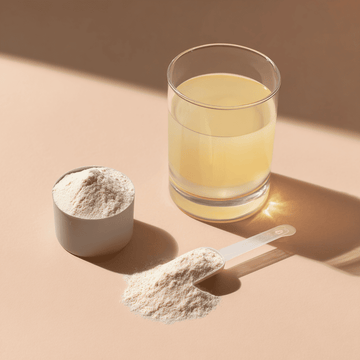
Creatine monohydrate is the most popular form of creatine supplement, familiar to athletes and health-conscious individuals worldwide. It is a synthetically produced form of creatine that has been studied extensively and is considered safe. Approximately half of your body's creatine stores come from food, primarily meat and fish; the remainder is produced in the liver and kidneys.
This article explains how creatine monohydrate works, who benefits most from it, and how to optimally dose it. You'll receive practical tips on intake, learn about potential risks, and find comparisons to other forms of creatine.
Definition and origin
Creatine is a naturally occurring substance found primarily in your muscles and brain. Monohydrate means that each creatine unit is bound to a water molecule. This form is odorless and tasteless, dissolves easily, and has been the standard for over 20 years.
Natural occurrence
- Red meat and seafood provide around 1-2 g of creatine per 500 g serving.
Your body synthesizes about 1 g of creatine daily in the liver, pancreas, and kidneys.
Even with a meat-free diet, the body's own reserves are sufficient – but this is where supplementation is most worthwhile.

How does creatine monohydrate work?
Creatine monohydrate primarily increases phosphocreatine stores in your muscles. This helps you regenerate adenosine triphosphate (ATP) faster. ATP is your direct energy source during intense exercise.
Increase ATP production
Phosphocreatine provides an immediate ATP reserve.
- You can last longer with short, explosive bursts of activity (e.g., sprinting, weightlifting).
Studies show up to a 15% increase in performance with repetition exercises.
Supporting muscle growth
- Higher training intensity promotes muscle hypertrophy.
- In a study, subjects built up 2 kg more muscle mass in six weeks than the control group.
- Creatine binds water in the muscle fibers, which slightly increases cell volume.
Accelerate Regeneration
- Faster ATP regeneration reduces rest times between sets.
- Combined with sufficient calories and protein, it promotes muscle growth after training.
- Some studies also suggest reduced muscle fatigue.
Who benefits from creatine monohydrate?
Not everyone needs creatine, but certain groups benefit particularly from it. Are you unsure whether it's right for you?
Athletes and strength athletes
Creatine is particularly valuable for weightlifters, sprinters, CrossFit athletes, and team athletes who regularly perform short, intense bursts of activity. It increases speed-strength, improves explosiveness, and enables longer periods of sustained performance during repeated exertion. Numerous studies confirm that creatine monohydrate measurably improves ATP regeneration, the fastest energy source in muscles, thereby allowing for greater strength and training volume.
Older adults
Muscle mass decreases with age, a process known as sarcopenia. Creatine can help maintain muscle strength and function and slow age-related decline. In combination with regular resistance training, creatine has been shown to improve mobility and quality of life, making it a valuable component of preventive health strategies for older adults (Candow et al., Nutrients , 2019).

Vegetarians and vegans
People who abstain from meat often have lower creatine levels, as creatine is primarily found in animal products. Targeted supplementation can significantly increase muscle strength, recovery capacity, and mental performance. Studies show that vegans, in particular, can achieve similarly high creatine storage levels as omnivores after taking creatine monohydrate—a clear advantage for energy and performance in everyday life as well as during training.
Fitness beginners and those training for regeneration
Even beginners benefit from creatine, as it measurably accelerates training adaptation in the first few weeks. It supports cell hydration, which improves muscle metabolism and promotes regeneration after exertion. Thus, creatine can help you make faster progress, reduce muscle soreness, and maintain motivation in your training in the long term.
People with high levels of mental or physical stress
Creatine not only affects muscle cells but also the brain. It can help reduce mental fatigue and support cognitive performance during stressful periods. Especially during sleep deprivation, intense work periods, or when juggling multiple sports activities, it can stabilize energy levels and improve overall well-being.
Dosage and administration
The correct dosage is crucial for effectiveness and tolerability. Two common strategies have become established.
Charging phase explained
Many start with a so-called loading phase to quickly saturate the muscle stores.
Dosage recommendation
- Divide the daily amount into 4-5 individual doses (5 g each).
- Dissolve the powder in water, juices or shakes.
- It's best to consume each portion with carbohydrates to optimize absorption.
advantages and disadvantages
- Advantage: Rapid saturation of creatine stores.
- Disadvantage: Higher doses can lead to gastrointestinal problems in sensitive individuals.

Determine maintenance dosage
After the loading phase, 3–5 g per day is sufficient to keep creatine stores full. Excess creatine is excreted without providing any additional benefit.
Optimal times for taking the medication
- Before or after training, together with a carbohydrate source.
- Alternatively, in the morning with breakfast if you don't have time for timing on training days.
Side effects and safety
Studies have shown that creatine monohydrate is safe if you don't exceed 3–5 g daily. However, you should keep a few things in mind.
Potential risks
- Digestive problems such as bloating or diarrhea, especially during the loading phase and with high doses.
- If you have pre-existing kidney problems, you should consult your doctor beforehand.
- For detailed information on possible creatine side effects, see our special article.
Precautions
- Drink plenty of fluids to support kidney function.
- Pay attention to quality: A pure supplement without unwanted additives is ideal.
- Do not consistently exceed the recommended dosage.
Creatine Monohydrate Comparison
There are different forms of creatine, but monohydrate remains the best researched and cheapest option.
Monohydrate versus alternatives
Creatine monohydrate provides the same training boost as more expensive forms. Studies show that pure monohydrate extracts are at least equivalent.
Tips for your application
1. Optimize timing
Creatine is best absorbed when combined with a small amount of carbohydrates. Around 50g of carbohydrates, such as a glass of fruit juice or a small meal, is sufficient to improve absorption via the insulin mechanism. Taking it directly after training is particularly effective, as the muscles are more receptive.
2. Combine with nutrients
Proteins and carbohydrates work synergistically with creatine. A post-workout shake containing creatine, protein powder, and a moderate amount of carbohydrates optimally supports muscle growth and regeneration. Amino acids or electrolytes, such as those found in MTM Amino Electrolyte , can also further promote cell hydration and energy supply.
3. Maintain consistency
For creatine to be fully effective, consistency is crucial. Take it daily, even on rest days, at the same time to keep your muscle stores consistently full. Even a few missed doses can deplete these stores and diminish performance gains.
4. Ensure adequate fluid intake
Creatine draws water into muscle cells, which promotes cell volumization. Therefore, ensure adequate fluid intake, ideally at least 2.5-3 liters of water per day, to support kidney function and achieve optimal results. Good hydration also improves energy, concentration, and recovery.
5. Designing the cycle effectively
After approximately 8-12 weeks of use, a short break of 2-4 weeks can be beneficial to reset the metabolism. While not strictly necessary, this can help maintain consistent long-term effects. Afterward, the creatine cycle can be easily restarted, ideally accompanied by targeted strength or hypertrophy training.
Conclusion and Next Steps
Creatine monohydrate is a safe, well-researched supplement for anyone looking to optimize strength, performance, and recovery. You'll benefit especially if you engage in intense training, are getting older, or follow a vegetarian diet.
Key points at a glance:
Monohydrate is inexpensive and best studied.
- Charging phase or a steady 3-5 g/day is possible.
- Combine with carbohydrates for better absorption.
- Pay attention to quality and hydration.
- Track your progress to see the effect.
Try taking 3g of creatine monohydrate after your workout today and see how your recovery times shorten. Do you have any questions or experiences to share? Write them in the comments – we look forward to your input.


