

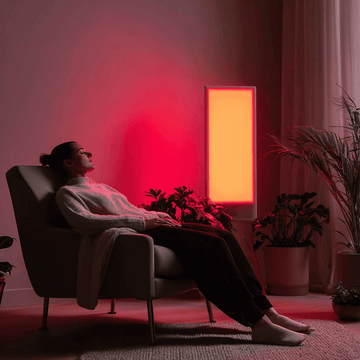
Have you ever tried red light therapy after a workout and wondered if it really works? Especially during the autumn and winter months, many people are familiar with this problem: an intense workout not only leaves behind sore muscles and strains, but often also a persistent feeling of fatigue. Recovery periods drag on, the next training success is slow in coming, and the motivation to stick with it dwindles. Health-conscious individuals, for whom supplementation, performance, and longevity are important, are therefore constantly searching for proven methods for better recovery. One method is experiencing a real comeback: red light therapy.
But what can red light therapy really do? How does it work, what do the studies say, and for whom is it beneficial? This article provides an in-depth, scientifically sound overview of the effects of red light therapy, explained clearly and with many practical tips!
What is red light?
Red light is electromagnetic light with a wavelength spectrum of approximately 600 to 700 nanometers (nm). It therefore belongs to the visible light spectrum, precisely at the transition from red to infrared, and thus clearly differs from other forms of light/heat therapy.
- Red light (approx. 600–700 nm): Visible, it produces a warm, reddish light color. It is often used in lamps or panels, shining directly onto the skin and penetrating up to 1 cm deep into the tissue.
- Infrared (from about 700 nm): Invisible light, subdivided into IR-A, -B and -C. Depending on the wavelength, infrared radiation can penetrate very deep into tissue, up to several centimeters (especially IR-A).
- Heat lamps: Often combination devices that emit light in the visible and infrared spectrum, but the main focus is on pleasantly perceived surface warmth.
Mechanism of action: The "active" red light not only has a warming effect, but also stimulates biological processes in the skin and underlying tissue without damaging the skin. It specifically activates molecular processes in cell structures and can thus influence regeneration, blood circulation, and inflammatory responses.
How does red light affect the body?
Cell biological basics
The focus of red light therapy is the stimulation of the mitochondria, the powerhouses of our cells. Mitochondria are responsible for converting oxygen and nutrients into adenosine triphosphate (ATP), the universal "fuel" for all living processes.
Here's how it works:
1. The cells contain special photoreceptors (such as cytochrome c oxidase) that absorb red light and convert it into biochemical activity.
2. This activation leads to a Increased ATP production: The cell produces more energy for repair and building processes.
3. At the same time, genetically generated enzymes are activated, which have an antioxidant effect and reduce cell stress.
What does that mean for you?
Muscle cells that are stressed through exercise benefit from faster repair processes, less oxidative stress, and an overall better functionality.
Blood circulation & oxygen supply
Red light also has a demonstrable effect on the smallest blood vessels (capillaries).
- Heat effect: Skin temperature rises, blood vessels dilate (“vasodilation”).
- Result: More blood reaches the target tissue, which improves both the Oxygen supply as well as the transport of nutrients improved muscle function, a crucial advantage for post-workout recovery.
- This allows waste products such as lactate or inflammatory substances to be removed more quickly, thus reducing muscle pain and swelling.
Anti-inflammatory effects
Biochemically, red light is able to reduce the release of pro-inflammatory substances such as IL-6, TNF-alpha and prostaglandins.
Meaning:
- Red light slows down inflammatory processes that typically occur after intensive training or muscle injuries.
- Clinical studies show: Swelling and pain decrease, and healing from injuries can be accelerated.

Red light therapy in sports - the most important advantages
Faster recovery after training
Reduce muscle pain: Studies and testimonials show that athletes experience less severe and shorter-lasting muscle soreness (DOMS, delayed onset muscle soreness) after targeted use of red light.
- Increased ATP production and blood flow accelerate the repair of training-related micro-damage in the muscles.
- Breakdown products of muscle metabolism (e.g. lactate) are flushed out more quickly.
Conclusion: You recover your strength more quickly and thus increase your training capacity, naturally and without risky substances.
Injury management
Acute sports injuries: In cases of strains, muscle fiber tears, or joint overload, red light therapy can help shorten recovery time. It has a long tradition of use in physiotherapy, for example, for knee injuries, muscle fiber tears, herniated discs, or tense neck muscles.
Example: After a muscle fiber tear, reintegration into training is possible more quickly, mobility returns sooner, and pain subsides sooner.
Performance enhancement
Red light does not directly increase your strength or endurance; it works "indirectly" by increasing the time and frequency of possible training sessions:
- Reduced downtime: You train more regularly because muscle soreness and micro-injuries heal faster.
- Improved muscle growth: Faster regeneration allows the next training stimulus to be set more effectively.
- Synergy with supplements: You can make optimal use of the increased cellular energy by combining it with a protein-rich diet and targeted nutritional supplements.
Red light and skin health
Effects on collagen, anti-aging and skin appearance
Red light therapy is no longer just for muscle regeneration – it's also gaining increasing attention in the areas of skin health, anti-aging, and beauty. The high-energy red light stimulates the fibroblasts in the skin, which are responsible for producing collagen and elastin. Studies show that regular red light application can increase collagen density, smooth skin texture, and reduce small wrinkles and fine lines, all without invasive procedures or chemicals.
Even discoloration, blemishes, and a tired-looking complexion can often be positively influenced by improved blood circulation and faster cell regeneration. Many users report a brighter, more even complexion and a fresher appearance after a few weeks of red light therapy.
Use for acne, scars or wound healing
Red light therapy can be beneficial for inflammatory acne and blemished skin by inhibiting inflammation and accelerating wound healing. The antibacterial effect of some light wavelengths helps to harmonize the skin's environment and soothe pimples during the healing phase. Fresh scars, minor cuts, and skin irritations also benefit from increased cell repair and improved collagen synthesis, which can make scars less noticeable.
Since red light boosts the metabolism of skin cells, it supports the healing of minor injuries more efficiently, a plus especially for active people or after cosmetic treatments.
Risks for sensitive skin or pigmentation disorders
In general, red light therapy is considered very skin-friendly and non-invasive. However, people with particularly sensitive or very fair skin should approach the therapy gradually and watch for any redness or increased pigmentation. If you have a known pigmentation disorder such as melasma, active skin cancer, or photosensitivity, it is advisable to consult a doctor.
It remains important to note: The application should always be carried out according to the manufacturer's instructions; more light and longer application do not necessarily bring more effect, but can irritate the skin.

Red light therapy for everyday life & biohacking tips
Morning routines, improved sleep, increased well-being
Red light therapy integrates perfectly into your daily routine and isn't just for evening relaxation after exercise. Many biohackers specifically use red light in the morning to start the day energized, reduce stress levels, and positively influence their circadian rhythm (e.g., to combat winter blues). Used in the evening, red light can help prepare you for restful sleep by promoting muscle relaxation and calming the nervous system.
Regular sessions have been proven to improve mood, concentration and overall well-being, without side effects or chemicals.
Integration with meditation, yoga, stretching
Red light therapy can be wonderfully combined with relaxing or movement-enhancing practices such as yoga, stretching, or meditation. The gentle warmth increases muscle flexibility and facilitates the release of tension during the practice. At the same time, the light promotes deeper relaxation, enhances mindfulness, and transforms the recovery period into a true moment of self-care.
Many users report that combining red light therapy with meditation leads to more intense relaxation and a positive body image.
Linking to other biohacking practices
Especially in the field of biohacking, red light therapy has established itself as a key component. Among the most popular "stacks" are combinations with targeted supplements (vitamin D3/K2, magnesium, omega-3), intermittent fasting, cold training, or breathing exercises (e.g., Wim Hof). Light therapy is also gaining increasing importance in conjunction with wearables, HRV monitoring apps, and smart sleep and recovery tracking.
These combinations allow you to specifically optimize various regeneration and performance aspects of your body and achieve your individual health goals even more efficiently.
Practical application of red light in everyday life
At home: In stores you can find red light lamps and modern LED red light panels that have been specially developed for home use.
- Panels are large-area; thanks to modern LEDs, they are efficient, durable and very convenient to use.
Smaller lamps are particularly suitable for targeted treatment, for example on the shoulders, knees or neck.
After training:
- Ideal time for application: Directly after the workout, to treat the muscle area that has just been used.
- Recommended duration: 10–20 minutes per muscle group.
- Distance: Approximately 20-40 cm from the skin (depending on manufacturer's instructions).
Regularity:
- For lasting effects, an application is recommended. 3-4 times per week.
- For acute treatment (in case of muscle soreness or after injuries), it can also be applied daily.
Security:
- Do not look directly into the light source!
- Cover your glasses or eyes.
- Lamps/panels should not be operated for longer than recommended (risk of overheating).
Important note regarding pregnancy, skin diseases, and medication-induced photosensitivity: Always consult your doctor beforehand!
💡 Tip: Combine red light therapy with a sound supplement strategy, such as vitamin D3/K2 for the immune system and bone health, or omega-3 for cell membranes. This further amplifies the regeneration and protective mechanisms of your muscles!

Red light compared to other regeneration methods
Red light district vs. sauna:
Both promote blood circulation, but saunas affect the entire body and are more likely to put a strain on the circulatory system. Red light therapy can treat muscles and joints more effectively and is gentler on cardiovascular patients.
Red light vs. cold applications (ice baths, cryotherapy):
Cold reduces inflammation through vasoconstriction (narrowing of blood vessels), the opposite of red light! Both methods can work synergistically, for example after particularly intense exertion (cold directly after exercise, red light for later regeneration).
The key to optimal regeneration:
A clever combination: Targeted heat (red light) + high-quality micronutrients (supplements) + restful sleep and training breaks.
FAQ - Frequently Asked Questions about Red Light Districts
1. How often should I use red light therapy?
Most experts recommend using red light therapy about 3-4 times a week after training or when experiencing discomfort. For acute recovery after intense exertion, daily use can also be beneficial, as long as the manufacturer's instructions are followed. For chronic conditions or preventative purposes, the frequency can be individually adjusted; regularity is key, not maximum frequency.
2. Does red light therapy really help with muscle soreness?
Yes, numerous scientific studies and practical experience confirm that red light therapy can noticeably alleviate sore muscles (DOMS). The light therapy promotes blood circulation and supports cell regeneration, thus helping pain and stiffness subside more quickly. For optimal results, it is important to use the therapy as soon as possible after training and at the recommended dosage.
3. Can I use red light therapy daily?
Daily use is generally possible and unproblematic for many people. However, the recommended usage time per session should not be exceeded to avoid skin irritation or overheating. Those with sensitive skin or certain pre-existing conditions should consult a doctor before intensive use.
4. What is the difference between red light and infrared?
Red light refers to visible light waves in the 600-700 nm range, which primarily affect superficial tissue layers. Infrared light begins at approximately 700 nm, is invisible, and can penetrate deeper into tissue; this effect is particularly desirable in infrared saunas or special combination panels. For targeted muscle regeneration after exercise, a combination of both spectra is often recommended to address both superficial and deeper structures.
5. Is red light therapy also suitable for chronic tension and everyday office life?
Yes, especially people with neck, shoulder, or back tension benefit from regular red light therapy. The warmth and photobiological effects help to loosen muscle tension and improve blood circulation in the affected area. This makes red light therapy ideal for providing lasting relief from the typical discomfort experienced after prolonged sitting or repetitive strain.
Sources:
- Atiș, G., Aktaş-Çetin, E., Ergin, C., & Şen, BB (2021). Efficacy of low-level laser therapy in the treatment of acne vulgaris: A randomized, split-face, single-blind study. Journal of Cosmetic and Laser Therapy, 23 (7-8), 369-374. https://doi.org/10.1080/14764172.2020.1870579
- Barolet, D., & Boucher, A. (2010). Prophylactic low-level light therapy for the treatment of hypertrophic scars and keloids: A case series. Lasers in Surgery and Medicine, 42 (4), 597-601. https://doi.org/10.1002/lsm.20929
- Ferraresi, C., Huang, YY, Hamblin, MR (2015). Effects of light-emitting diode therapy (photobiomodulation) on muscle recovery after exercise: A systematic review and meta-analysis. Lasers in Medical Science, 30 (2), 925-939. https://doi.org/10.1007/s10103-014-1617-2
- Hamblin, M.R. (2017). Mechanisms and mitochondrial redox signaling in photobiomodulation. Photochemistry and Photobiology, 94 (2), 199-212. https://doi.org/10.1111/php.12864
- Lee, SY, Park, K.-H., Choi, JW, Kwon, JK, & Hwang, SH (2007). A preliminary study of the histologic and clinical effects of a light-emitting diode (LED) on photoaged human skin. Journal of the American Academy of Dermatology, 56 (2), 220-227. https://doi.org/10.1016/j.jaad.2006.10.964
- Leal-Junior, ECP, Lopes-Martins, R. Á. B., Dalan, F., Alves, LP, Albertini, R., & Bjordal, JM (2010). Effect of phototherapy (low-level laser therapy) on exercise performance and markers of muscle damage: A systematic review and meta-analysis. Lasers in Medical Science, 25 (4), 531–537. https://doi.org/10.1007/s10103-009-0715-7
- Vanin, AA, Verhagen, E., Barboza, SD, Costa, L., & Tomazoni, SS (2018). Pre-exercise photobiomodulation therapy improves performance and decreases oxidative stress in muscle tissue. European Journal of Applied Physiology, 118 (1), 89–98. https://doi.org/10.1007/s00421-017-3758-0


